Introduction: Understanding Indonesian Vannamei Shrimp
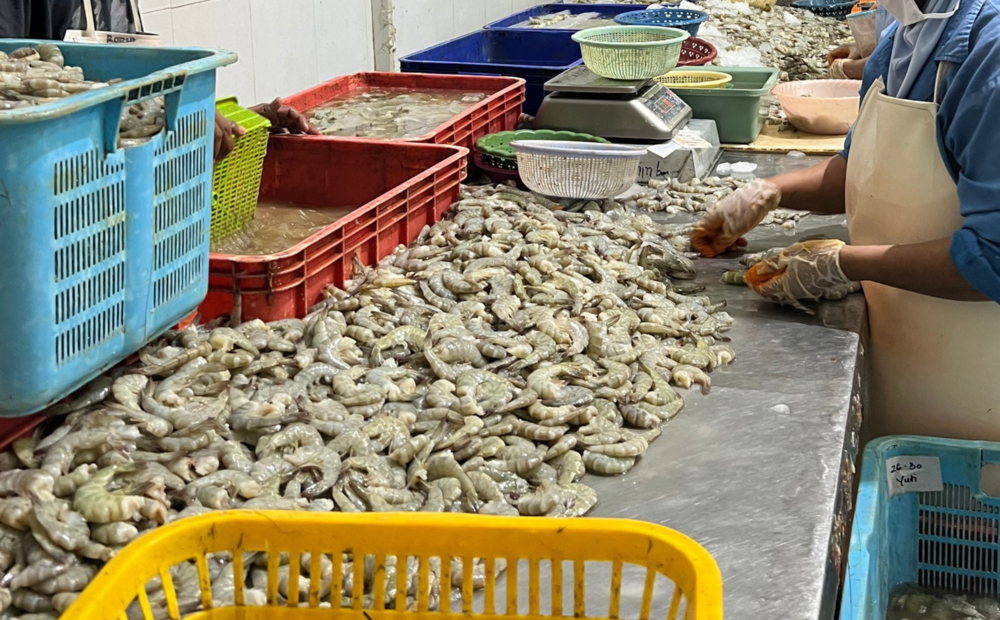
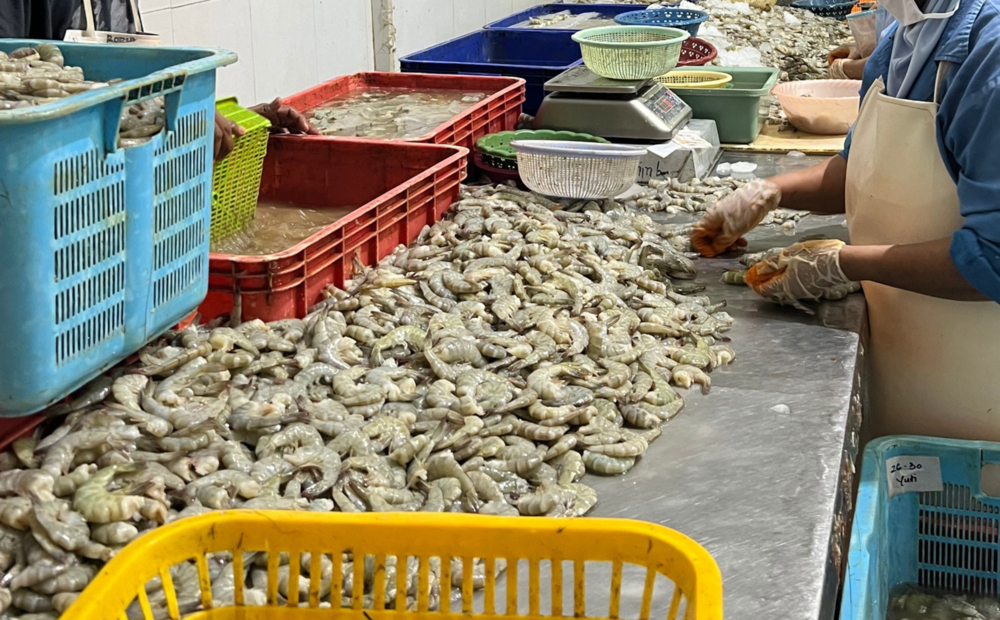
Vannamei shrimp is one of the most commercially important shrimp species in international seafood trade. Known scientifically as Litopenaeus vannamei and commonly called whiteleg shrimp, it is widely farmed because of its adaptability to aquaculture systems, relatively predictable production characteristics, and suitability for different processed seafood products.
For international seafood buyers, Indonesian Vannamei shrimp offers opportunities across several market segments, including foodservice, retail, wholesale distribution, and further processing. Depending on the buyer's requirements, products can be supplied whole, headless, peeled, deveined, individually quick frozen, or block frozen.
Indonesia has an established shrimp aquaculture and seafood-processing sector. Its position as a seafood-producing country, combined with access to domestic farming areas and processing facilities, makes it an important origin to consider when sourcing frozen shrimp.
However, purchasing shrimp internationally requires more than selecting a species and agreeing on a price. Buyers need to understand commercial size classifications, product forms, glazing, net weight, packaging, food safety, and cold-chain requirements.
This guide explains the characteristics of Indonesian Vannamei shrimp and the specifications international buyers should understand before requesting an export quotation.
What Is Vannamei Shrimp?
Vannamei shrimp (Litopenaeus vannamei) is a marine shrimp species native to the eastern Pacific Ocean. It is also known internationally as whiteleg shrimp or Pacific white shrimp.
According to the FAO Cultured Aquatic Species Information Programme, the species has become one of the most widely cultivated shrimp species because of its biological characteristics and suitability for controlled aquaculture production.
Its commercial advantages include:
-
Adaptability to different farming environments
-
Suitability for intensive and semi-intensive production
-
Relatively consistent growth under appropriate management
-
Availability in different commercial sizes
-
Compatibility with several processing and freezing methods
-
Broad acceptance in international seafood markets
Vannamei shrimp is particularly important because it can be processed into a wide range of products. A single species can serve buyers looking for whole shrimp, headless shrimp, peeled products, or value-added seafood ingredients.
For this reason, frozen Vannamei shrimp is widely used in restaurants, hotels, supermarkets, seafood wholesalers, and food manufacturing operations.
Indonesia's Role in Vannamei Shrimp Production and Export
Indonesia has developed a substantial shrimp aquaculture industry, supported by coastal farming areas, hatcheries, feed suppliers, processing facilities, and seafood export businesses.
The Ministry of Marine Affairs and Fisheries reported that Indonesian aquaculture production reached approximately 6.37 million tonnes in 2024 for fish commodities, excluding seaweed. Shrimp is among the country's priority aquaculture export commodities. This figure represents overall aquaculture fish production, not Vannamei production alone.
Species-specific historical production data published through FAO-based industry assessments show that Indonesian L. vannamei production reached approximately 702,345 tonnes in 2022. This provides an indication of the scale of Vannamei aquaculture, although it should not be treated as a current 2026 production figure.
Sources: Indonesian Ministry of Marine Affairs and Fisheries and Seafood Watch Indonesia Shrimp Assessment.
Indonesia's frozen shrimp export performance also demonstrates the importance of the sector in international trade.
According to World Bank WITS data based on UN Comtrade, Indonesia exported approximately US$1.084 billion worth of frozen shrimp and prawns, weighing 135.39 million kilograms, in 2024 under HS code 030613.
The main reported destinations included:
| Destination | Export value | Export volume |
|---|---|---|
| United States | US$676.85 million | 84,963.7 tonnes |
| Japan | US$222.61 million | 23,992.6 tonnes |
| China | US$58.44 million | 10,562 tonnes |
These figures cover frozen shrimp and prawns across the HS category, not exclusively Vannamei shrimp. They nevertheless demonstrate Indonesia's established participation in international frozen shrimp trade.
Source: World Bank WITS – Indonesia Frozen Shrimp Exports, 2024.
Vannamei Shrimp Farming and Harvesting in Indonesia
Vannamei shrimp production generally involves several stages, beginning with hatchery production and continuing through nursery, grow-out, harvesting, and processing.
Farming systems can vary considerably depending on location, investment, pond design, stocking density, water management, and production objectives.
At a general industry level, the process includes:
1. Hatchery and post-larvae preparation
Shrimp production begins with hatchery-reared post-larvae. Seed quality, health status, and suitability for the farming environment are important considerations before stocking.
2. Pond preparation and stocking
Farming facilities prepare ponds and establish appropriate water conditions before introducing the post-larvae.
3. Grow-out management
Farm operators monitor water quality, feeding, shrimp growth, and pond conditions throughout the production cycle. Parameters such as dissolved oxygen, temperature, salinity, and water quality require appropriate management.
4. Harvesting
Shrimp are harvested when they reach the target size and commercial requirements. Harvest timing can influence the final count per kilogram, processing yield, and buyer suitability.
5. Transportation and processing
After harvesting, shrimp should be handled promptly and maintained under suitable chilled conditions before processing. Delays or poor temperature management can negatively affect freshness and product quality.
Farming practices are not identical across all Indonesian producers. Buyers should evaluate the actual sourcing and production arrangements of their supplier rather than assume that every farm follows the same production system.
Understanding Vannamei Shrimp Sizes
Shrimp size is one of the most important commercial specifications in international trade.
Buyers generally use count classifications to describe how many shrimp are included in a specific unit of weight. Two commonly encountered systems are:
-
Count per kilogram (pcs/kg)
-
Count per pound (pcs/lb)
The distinction matters because the same numerical size code can represent very different shrimp sizes depending on the counting basis.
Count per Pound
In many international shrimp markets, especially in North America, commercial size codes are expressed as the number of shrimp per pound.
For example:
-
16/20 means approximately 16–20 shrimp per pound.
-
21/25 means approximately 21–25 shrimp per pound.
-
26/30 means approximately 26–30 shrimp per pound.
A lower count generally indicates larger individual shrimp because fewer pieces are needed to make up one pound.
The following are examples of commonly encountered commercial size classifications:
| Size code | Shrimp per pound | Approximate shrimp per kg |
|---|---|---|
| 16/20 | 16–20 | 35–44 |
| 21/25 | 21–25 | 46–55 |
| 26/30 | 26–30 | 57–66 |
| 31/40 | 31–40 | 68–88 |
| 41/50 | 41–50 | 90–110 |
| 51/60 | 51–60 | 112–132 |
| 61/70 | 61–70 | 135–154 |
The kilogram equivalents are mathematical conversions, not separate official grading standards. Actual commercial tolerances and count ranges should be confirmed with the supplier.
Count per Kilogram
In Indonesia and several Asian seafood markets, shrimp sizes are also commonly expressed as the number of pieces per kilogram.
For example:
-
20/30 pcs/kg
-
30/40 pcs/kg
-
40/50 pcs/kg
-
50/60 pcs/kg
-
60/70 pcs/kg
-
70/80 pcs/kg
-
80/100 pcs/kg
A 30/40 count-per-kilogram product contains approximately 30–40 shrimp in one kilogram.
This system is particularly useful for buyers who purchase shrimp according to metric packaging weights.
How Buyers Should Interpret Shrimp Sizes
The most important rule is to confirm whether a quoted size refers to pieces per pound or pieces per kilogram.
A specification stating only “31/40 shrimp” is incomplete unless the counting basis is identified.
The size may also depend on product presentation. For example, HOSO shrimp and HLSO shrimp have different weights because the head and shell contribute to the total product weight.
For commercial purchasing, buyers should confirm:
-
Count basis: pcs/kg or pcs/lb
-
Product presentation
-
Whether grading is based on raw or processed weight
-
Acceptable size tolerance
-
Minimum and maximum count
-
Whether mixed sizes are permitted
Common Vannamei Shrimp Export Product Forms
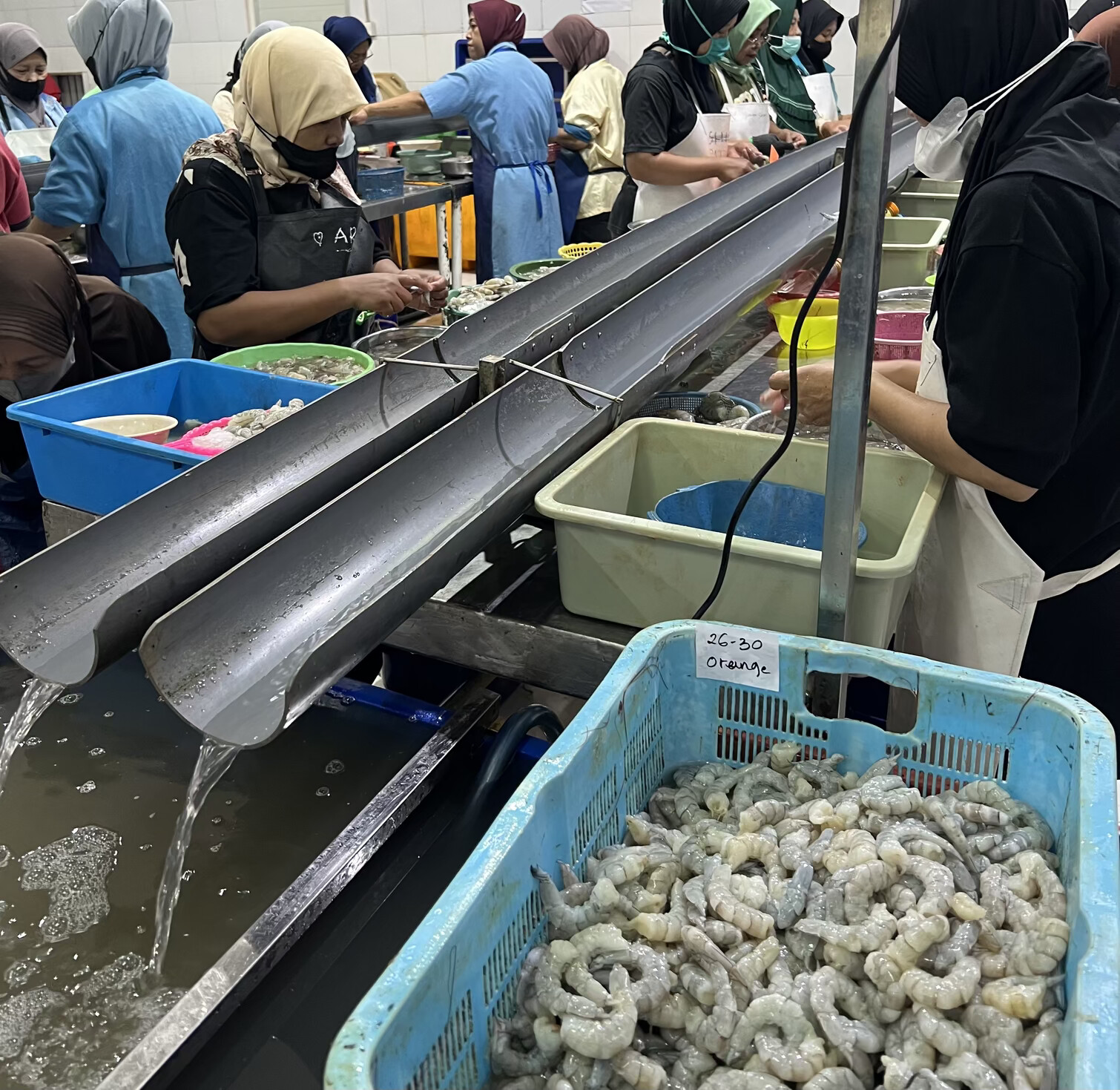
Vannamei shrimp can be processed into different presentations depending on the destination market and buyer's requirements.
HOSO – Head-On Shell-On
HOSO shrimp retain both the head and shell.
This form is commonly used in seafood retail, restaurants, Asian foodservice, and markets where whole shrimp presentation is preferred.
Commercial considerations include appearance, shell condition, head integrity, size uniformity, and freshness.
HLSO – Headless Shell-On
HLSO shrimp have their heads removed while the shell remains intact.
This presentation is widely used in wholesale and foodservice markets. Removing the head reduces product weight and changes the count classification compared with whole shrimp.
Buyers should specify whether the tail is retained and whether additional processing is required.
PTO – Peeled Tail-On
PTO shrimp have the shell removed while the tail segment remains attached.
This form is commonly used in restaurant dishes, seafood platters, breaded products, and other foodservice applications where an attractive tail presentation is preferred.
PUD – Peeled Undeveined
PUD shrimp have the shell removed but the digestive tract has not been removed.
This product may be suitable for further processing, depending on the buyer's requirements and intended application.
P&D – Peeled and Deveined
P&D shrimp have both the shell and digestive tract removed.
This form is commonly used in restaurants, retail packs, ready-to-cook products, and food manufacturing.
It offers convenience to downstream users but requires additional processing steps and yield considerations.
IQF and Block-Frozen Shrimp
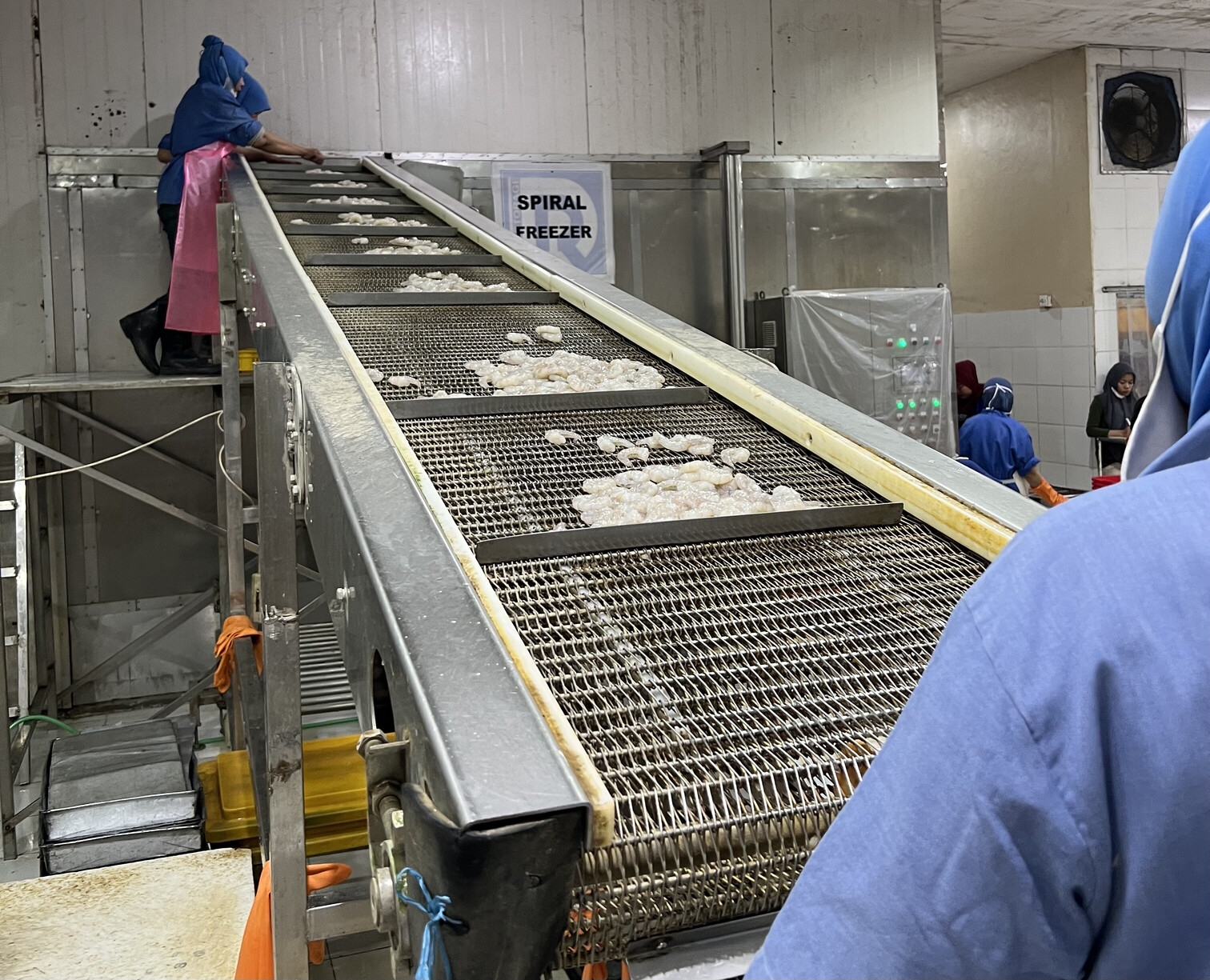
IQF stands for Individually Quick Frozen. Each shrimp is frozen separately, allowing individual pieces to be separated after freezing.
Block-frozen shrimp are frozen together in a block, often within a defined package or container configuration.
| Product type | Main characteristic | Typical commercial consideration |
|---|---|---|
| IQF | Individual shrimp frozen separately | Convenient portioning and separation |
| Block frozen | Shrimp frozen together in a block | Efficient bulk storage and handling |
Neither method is automatically better for every buyer. The right choice depends on distribution requirements, intended use, storage capacity, and pricing.
Quality Specifications for Frozen Vannamei Shrimp
Product quality is a major consideration for importers sourcing frozen Vannamei shrimp.
Although individual buyer specifications vary, several quality parameters are commonly evaluated.
Freshness and appearance
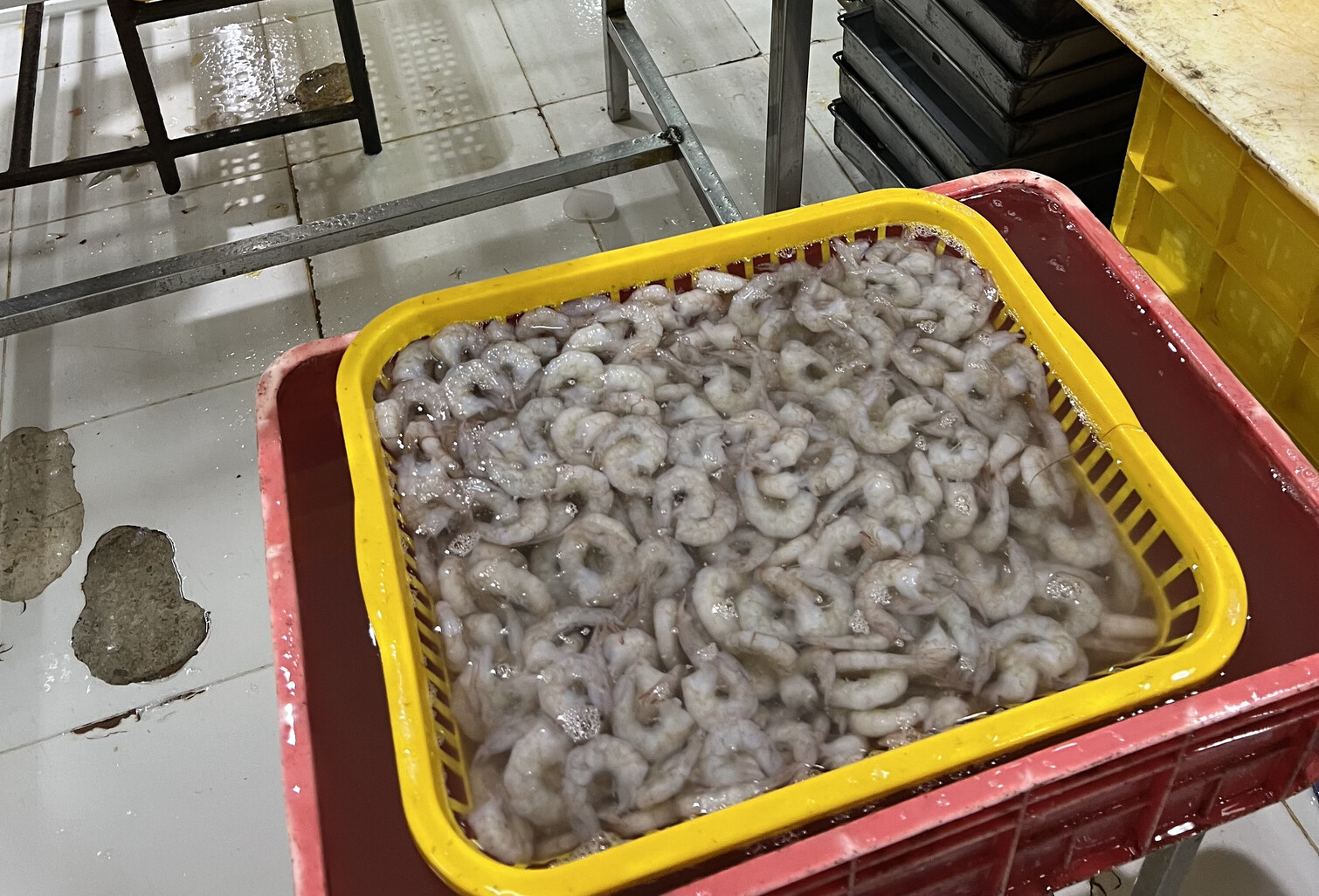
Shrimp should have a characteristic appearance without obvious signs of deterioration. Unusual discoloration, strong off-odors, or deteriorated tissue may indicate handling or storage problems.
Shell condition
For shell-on products, buyers may check shell integrity, damage, discoloration, and physical appearance.
Texture
Shrimp should retain an appropriate texture for the agreed product and processing form. Softness or mushiness can be associated with poor raw-material condition or unsuitable handling.
Size consistency
Grading should be sufficiently consistent to meet the agreed count range. Excessive variation can create problems for foodservice portioning and retail presentation.
Glazing percentage
Glazing is a protective layer of ice applied to frozen seafood to help reduce dehydration and oxidation.
The glazing percentage should be clearly agreed between buyer and supplier. Importantly, declared net product weight should exclude the glaze, in accordance with the applicable labeling and product requirements.
Moisture and net weight
Buyers should distinguish between the product's actual net weight and the gross weight that includes packaging and, where applicable, glazing.
Codex Standard CXS 92-1981 for quick-frozen shrimp addresses product quality, glazing, net contents, labeling, and frozen storage requirements.
Source: Codex Standard for Quick-Frozen Shrimps or Prawns.
Packaging and Cold Chain Management
Export packaging protects the shrimp and supports safe transportation through international distribution channels.
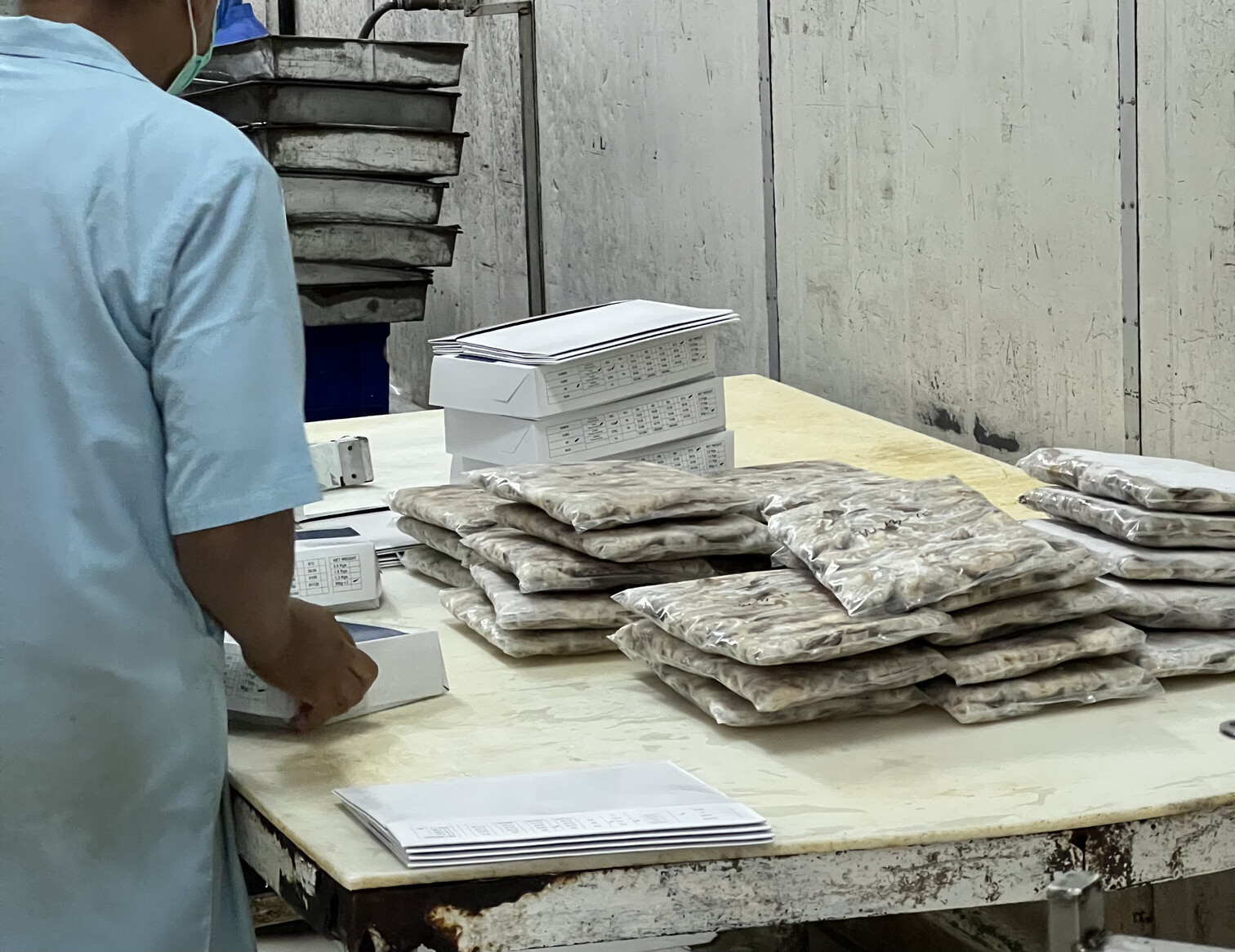
Common packaging configurations may include:
-
Food-grade inner plastic bags
-
Vacuum packaging where specified
-
Printed retail bags
-
Master cartons
-
Bulk export cartons
-
Labeled shipping boxes
The packaging configuration should reflect the buyer's requirements, product presentation, freezing method, and destination market.
Carton labels may include:
-
Product name
-
Scientific species name
-
Product presentation
-
Size classification
-
Net weight
-
Glazing percentage, where applicable
-
Country of origin
-
Production or lot identification
-
Storage instructions
-
Exporter or processor information
The information should be consistent with the commercial invoice, packing list, and other shipment documents.
Frozen Storage and Transportation
Frozen shrimp is commonly stored at −18°C or colder, subject to the applicable product specification and destination requirements.
Cold-chain management should cover receiving, processing, freezing, cold storage, transportation, and container loading.
For international shipments, reefer containers are generally used to maintain the required frozen cargo environment.
Good loading practices also matter. Cartons should be arranged to support appropriate airflow and should not obstruct the reefer's air circulation system.
Major Export Markets for Indonesian Vannamei Shrimp
Indonesia supplies frozen shrimp to several important international markets.
Based on 2024 WITS data for the broader frozen shrimp and prawn category, the United States was Indonesia's largest listed destination by value, followed by Japan and China.
United States
The United States is a major market for frozen shrimp products, serving retail, foodservice, wholesale, and food manufacturing businesses.
Buyers commonly evaluate size, presentation, processing specifications, food safety compliance, packaging, and consistency.
US importers must also comply with applicable FDA seafood requirements, including Seafood HACCP regulations.
Japan
Japan is an important destination for Indonesian frozen shrimp.
The market serves retail, restaurant, foodservice, and further-processing applications. Product appearance, freshness, size consistency, and detailed specifications can be particularly important.
China
China is another significant destination for Indonesian frozen shrimp.
Demand can cover different product forms and commercial channels, although buyers should confirm the applicable establishment registration, documentation, and import requirements for their specific products.
Other International Markets
Indonesia also participates in frozen shrimp trade with other Asian destinations and international markets, including Canada and several regional trading partners.
Export opportunities should be assessed market by market because import regulations, product preferences, and documentation requirements are not identical.
The trade figures cited above represent all frozen shrimp and prawns in the relevant HS category, not exclusively L. vannamei.
Food Safety, Traceability, and Export Compliance
Food safety is essential when sourcing frozen Vannamei shrimp internationally.
Buyers should assess the supplier's ability to maintain appropriate controls throughout sourcing, processing, freezing, storage, and shipment.
Important considerations include:
HACCP-based processing
Hazard Analysis and Critical Control Point principles help identify and control relevant food safety hazards during seafood processing.
However, buyers should verify the actual food safety system and certification status of the specific processing facility rather than assume that all Indonesian suppliers hold identical certifications.
Health certificates
Export health certification may be required by the destination country. The applicable certificate and issuing authority should be confirmed before shipment.
Residue monitoring
Depending on the destination market, shrimp may be subject to monitoring for veterinary drug residues and other regulated substances.
Traceability
A supplier should be able to provide relevant sourcing and production information, including lot identification and documentation that supports product traceability.
Destination-specific requirements
The United States, Japan, China, and the European Union each have their own regulatory frameworks. Importers should verify current requirements before confirming a purchase.
Indonesia's Ministry of Marine Affairs and Fisheries and the relevant fish quarantine and quality authorities provide export-related services and certification. The applicable requirements should be checked for each product and destination.
What Buyers Should Include When Requesting a Vannamei Shrimp Quotation
A clear inquiry helps suppliers provide accurate pricing and reduces the risk of misunderstandings.
International buyers should include the following details when requesting a quotation:
-
Species: Vannamei shrimp (Litopenaeus vannamei).
-
Size: For example, 16/20, 21/25, 26/30, or 31/40.
-
Count basis: Pieces per pound or pieces per kilogram.
-
Product form: HOSO, HLSO, PTO, PUD, or P&D.
-
Freezing method: IQF or block frozen.
-
Glazing: Required glazing percentage.
-
Packaging: For example, 1 kg, 2 kg, or buyer-specific packaging.
-
Quantity: Total kilograms, cartons, or containers.
-
Destination: Destination port and country.
-
Documentation: Required health certificates, origin documents, facility approvals, and other applicable records.
A detailed specification makes it easier to compare quotations accurately. Two suppliers may offer the same shrimp species and nominal size but different product presentations, glazing levels, packaging weights, or processing yields.
These differences can significantly affect the actual commercial value of an offer.
Conclusion: Sourcing Indonesian Vannamei Shrimp with Clear Specifications
Vannamei shrimp remains an important product in international seafood trade because of its wide range of commercial applications and suitability for different processing formats.
Indonesia's aquaculture and seafood export industries provide an established sourcing base for international buyers interested in frozen shrimp.
However, successful procurement depends on understanding the details behind the product: size classification, count basis, processing form, freezing method, glazing, net weight, packaging, food safety, and cold-chain management.
For importers, wholesalers, distributors, and foodservice businesses, clearly defined specifications are the foundation of a reliable sourcing relationship.
For an Indonesian seafood supplier, the ability to coordinate product sourcing, processing requirements, packaging, documentation, and international logistics is equally important.
IndoSeafoods aims to support international buyers in understanding Indonesian seafood products and exploring suitable sourcing opportunities. Whether the requirement involves HOSO, HLSO, peeled shrimp, or IQF products, the first step is always the same: establish the exact specification and align it with the buyer's intended market.
By focusing on accurate product information, transparent communication, and realistic supply planning, Indonesian Vannamei shrimp can remain a relevant option for businesses seeking frozen shrimp from Southeast Asia.